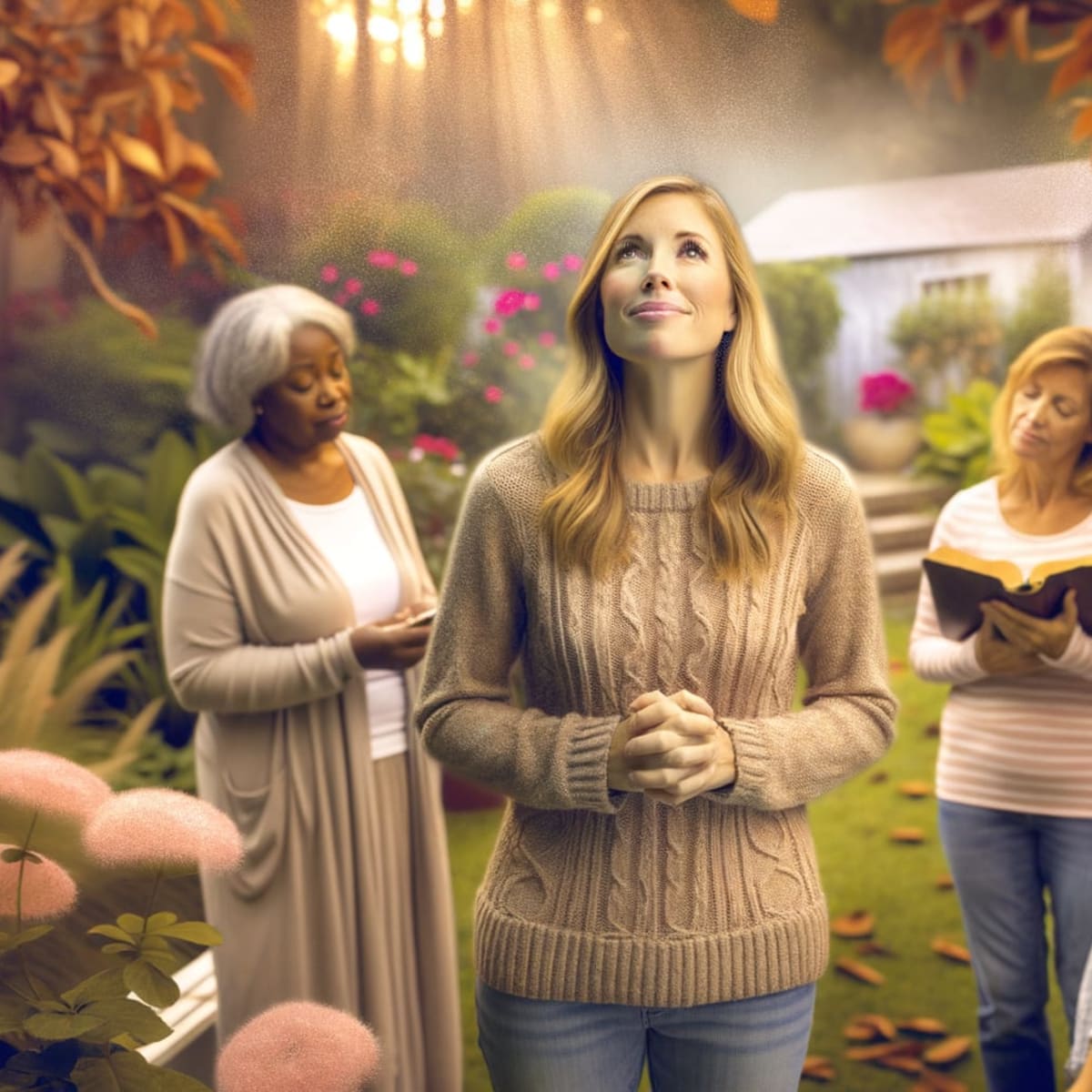

Biblical Vulnerability for Women: Why It Feels Risky and Powerful
Can I tell you something? Biblical vulnerability for women sounds beautiful… until it’s your turn to go first.
It’s one thing to nod along when someone else shares. It’s another thing to open your mouth and admit, “I’m not okay,” or “I need help,” or “I’ve been carrying this for a long time,” which is central to a christian approach to mental health. That’s when biblical vulnerability for women starts to feel risky. Real risky.
But here’s what I’ve learned in my own life and in rooms full of women, especially through christian community for women where honesty is welcomed. Biblical vulnerability for women is also one of the ways God brings healing into our bodies, our minds, and our communities through christian community support during adversity. Not because we overshare. Not because we perform. But because honesty breaks isolation, and God loves to meet us there.
Why does biblical vulnerability for women feel so risky?
How many of you have ever typed a text that started with, “Hey, can I be honest with you?” and then deleted it? Yeah. Same.
Biblical vulnerability for women can feel risky for a few simple reasons. And naming them doesn’t make you weak. It makes you aware.
We’re afraid of being misunderstood
Sometimes we don’t share because we’re sure people will hear us wrong. Or label us. Or reduce us to one chapter of our story.
I’ve watched women wrestle with this in real time. They want to be open, but they don’t want to be defined. And honestly, that’s wise—learning to obey god when uncomfortable often requires prayerful restraint. We are more than our hardest season.
Still, biblical vulnerability for women isn’t about handing people a title. It’s about letting God tell the truth about you, and letting a safe sister witness it with you.
We’re afraid of judgment
Sometimes the fear is loud. “What if they think less of me?” “What if I disappoint them?” “What if they treat me differently after this?”
That fear makes sense. Vulnerability can backfire when someone isn’t safe or isn’t mature, which is why healing from church hurt often requires discernment and time. Jessica talks about that kind of reality directly, that vulnerability can backfire, and the obedience is ours while the outcome is God’s .
But biblical vulnerability for women is not the same thing as throwing your heart into a crowd; it often goes hand in hand with setting boundaries as christian woman. Discernment matters. Timing matters. And the Holy Spirit is not silent about those things .
We’re afraid of the “after”
This part doesn’t get talked about enough.
Sometimes we don’t share because we don’t know what comes next, especially when spiritual rebuilding after setbacks feels overwhelming. What if we cry? What if we need support? What if someone offers to pray and we don’t know how to receive it?
Biblical vulnerability for women can feel risky because it changes the room. And that’s the point. When honesty shows up, pretending doesn’t get to run things anymore.
What does God say about biblical vulnerability for women?
Let’s keep this simple. God is not asking you to be dramatic. He’s inviting you to be honest.
And Scripture is clear that honesty in community is connected to healing.
James 5:16 (CSB) says, “Therefore, confess your sins to one another and pray for one another, so that you may be healed.”
Notice what that verse doesn’t say. It doesn’t say, “Confess to everyone.” It says “to one another.” That’s relationship language. Family language. Sisterhood language. This is biblical vulnerability for women in the context of safe community and prayer.
Also, the goal isn’t punishment. It’s healing. That word matters. A lot. Jessica’s book talks about how shame grows in silence and isolation, but honesty makes room for God’s healing .
So no, biblical vulnerability for women isn’t about living exposed. It’s about stepping into the light on purpose, with God and with safe people, so your heart can breathe again.
How biblical vulnerability for women becomes powerful (without oversharing)
Here’s the thing. Some of us hear “be vulnerable” and we picture a microphone, a stage, and a full life story.
But biblical vulnerability for women is usually smaller than that. It’s often one honest sentence. One brave prayer. One quiet conversation over coffee.
It breaks shame’s favorite strategy, isolation
Shame loves secrecy. It loves the late night spiral where you assume you’re the only one. It loves the thought, “I can’t tell anyone.”
But when one woman tells the truth, something shifts. Jessica describes this ripple effect, that one woman’s openness gives others permission to say “me too,” and courage becomes contagious .
That’s part of why biblical vulnerability for women is powerful. It changes the culture of a room. It creates safety. It builds trust.
It builds real community, not surface community
I’ve seen it again and again. When a woman shares honestly, other women exhale. Shoulders drop. Tears show up. Sometimes laughter shows up too.
And suddenly, we’re not strangers sitting in the same church service. We’re sisters.
Jessica writes that stories build trust and create that moment where someone else feels safe enough to share her heart too . That’s biblical vulnerability for women doing what it does best, pulling us into connection.
It turns your story into hope for someone else
One of my favorite things about God is that He wastes nothing.
Your story might feel ordinary to you. Or unfinished. Or a little messy. But God uses every detail. Jessica says we don’t need fancy words, we just need to show up and tell the truth, because our little moments matter .
That’s a big reason biblical vulnerability for women is powerful. You might share one small piece, and God uses it to steady someone else’s faith for the week. Maybe for the month. Maybe for longer.
How to practice biblical vulnerability for women with wisdom
But what does this look like on a Tuesday? When you’re tired and you’re not sure who’s safe and you’re not trying to make it weird?
Here are a few ways I’ve learned to approach biblical vulnerability for women without swinging into either extreme, silence or oversharing.
Start with God before you start with people
I know this sounds obvious. But it’s easy to skip.
Sometimes I have to sit with the Lord and say, “Okay, what part of this do You want brought into the light?” Not all of it. Not yet. Just the part He’s highlighting.
Jessica talks about this kind of discernment clearly, that the Holy Spirit nudges us what to share, with whom, and when, and that boldness is obedience, not over-sharing .
Choose “safe” over “available”
Not every friendly person is a safe person.
Biblical vulnerability for women works best when we share with women who are steady, prayerful, and kind. Women who can hold something without turning it into gossip, advice, or a sermon.
And yes, sometimes that safe person is a counselor. Sometimes it’s a leader. Sometimes it’s one trusted friend who has proven faithful over time.
Keep it simple, honest, and present tense
You don’t have to package it perfectly.
Try sentences like these (and yes, you can borrow them).
- “Can I share something I’ve been carrying?”
- “I’m in a process, and I could use prayer.”
- “I don’t need advice right now. I just need someone to listen.”
- “God is teaching me, but I’m still learning it.”
- “Would you pray with me before we leave?”
Biblical vulnerability for women doesn’t require a perfect ending. Jessica says our stories don’t have to be polished or “all fixed” for God to use them .
Ask yourself a few gentle questions first
I love simple questions. They slow me down.
Jessica has a set of questions she recommends praying through when sharing testimony, things like motivation, what details are needed, and trust with the outcome . That same idea works here too.
- Is this person safe and trustworthy?
- Am I sharing to get comfort, or to get free?
- Do I need prayer, accountability, or just a listening ear?
- What’s one clear thing I can ask for right now?
- Can I trust God with how this is received?
Those questions keep biblical vulnerability for women grounded. Not dramatic. Not impulsive. Grounded.
What if vulnerability doesn’t go well?
We need to talk about this, because it’s real.
Sometimes you share and the person responds awkwardly. Or too quickly. Or they change the subject. Or they say something that stings.
That doesn’t mean you did the wrong thing. It means you ran into someone’s limitations.
Jessica says vulnerability can backfire, especially if people aren’t ready or react from their own pain, and reminds us that our job is to be faithful while God handles the outcome .
If that happens, here’s what I want you to remember. Biblical vulnerability for women is still worth it. But it might need a different setting. A different person. A different pace.
Protect your heart without shutting it down
There’s a difference between boundaries and walls.
Boundaries say, “I’m going to be wise with my story.” Walls say, “No one gets in.” And most of us don’t want walls. We just want to feel safe.
Biblical vulnerability for women can include stepping back, getting support, and trying again with someone else. That’s not failure. That’s wisdom.
One small step you can take today
Let’s make this practical. Like, actually doable.
Here’s a simple step into biblical vulnerability for women that doesn’t require a spotlight or a long speech.
Pick one safe person. Text her one honest sentence. Then ask for one specific thing.
Something like, “Hey, I’m carrying some anxiety this week. Can you pray for peace and clarity for me today?”
That’s it.
And if you don’t have that person yet, you are not behind. You’re just building. Start by asking God to bring you one safe sister. Then keep your eyes open. Community usually forms one honest conversation at a time.
Biblical vulnerability for women doesn’t mean you tell everything. It means you tell the truth God is asking you to tell, in the way He’s asking you to tell it. And He is kind. He will help you.
With love and expectancy,
Jessica